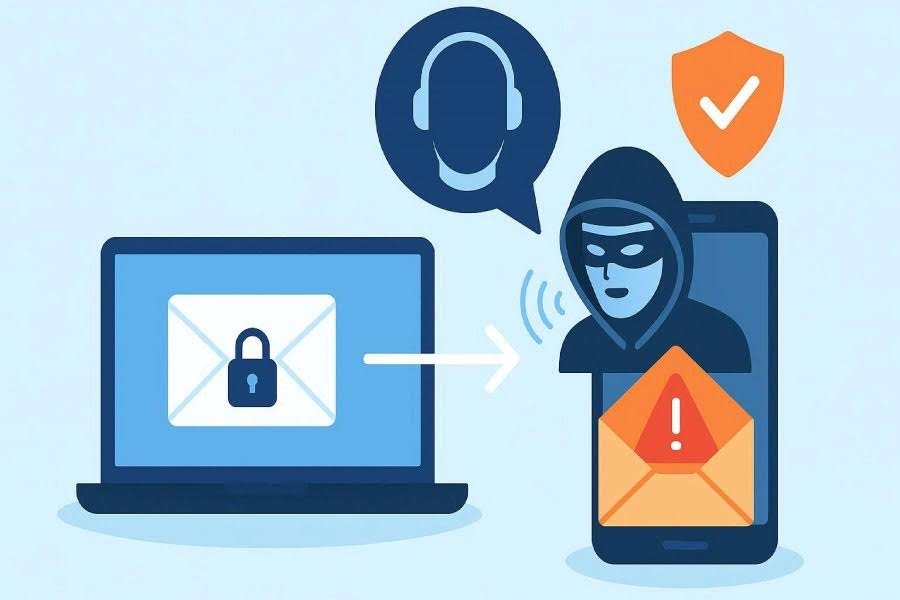
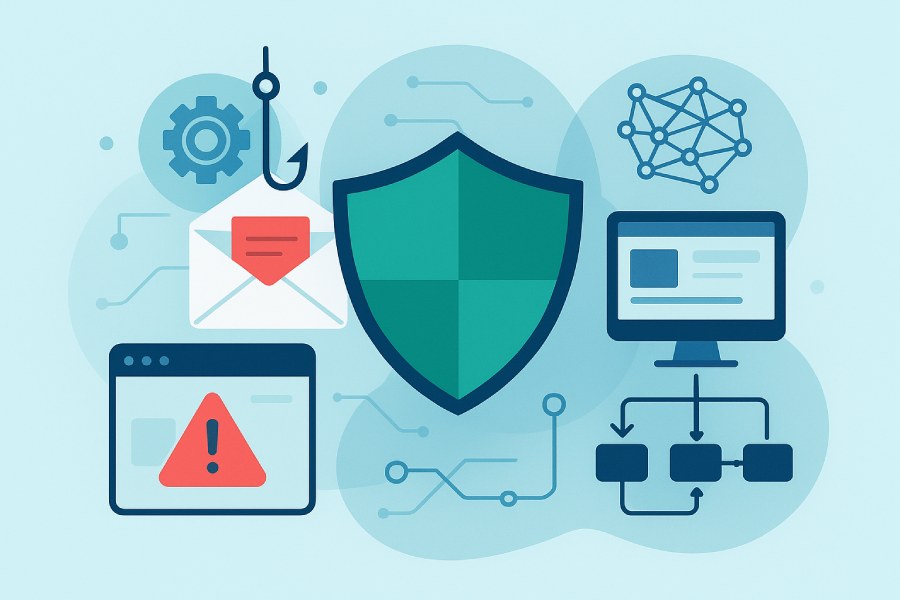
Phishing attacks persist because social engineering reliably exploits human trust, brand familiarity, and urgency. Threat actors evolve lures faster than signature-based defenses, leveraging brand impersonation (often Amazon and other consumer brands), email spoofing, website spoofing, and malicious links to drive credential theft, account takeover, and business email compromise (BEC). Even with strong email security, a single malicious email can trigger ransomware or data loss, creating outsized financial loss.
The phishing ecosystem has shifted from opportunistic spam to targeted, multi‑channel email attacks driven by generative AI and criminal marketplaces. Threat actors now pair convincing social engineering with compromised infrastructure to deliver machine-speed attacks that outpace legacy controls. As organizations accelerate adoption of cloud platforms and distributed work, the attack surface grows, and the likelihood of account takeover rises across executives, finance, IT, and third‑party vendors.
Targeted attack campaigns increasingly arrive as well-crafted emails that look routine but are engineered to mislead. In modern cybersecurity programs, email remains the most common doorway to a phishing attack that leads to a data breach, ransomware deployment, or silent information theft. Analyses from IBM’s X-Force Threat Intelligence Index, Barracuda researchers, and the Federal Bureau of Investigation (FBI) Internet Crime Report all highlight how email-borne social engineering has outpaced many other intrusion vectors.
Spear phishing succeeds because it blends social engineering with business realism. Cybercriminals mine LinkedIn org charts, press releases, and leaked credentials from a prior data breach to craft personalized emails that look routine: a vendor remittance, a benefits portal update, or a CFO approval.
Phishing email analysis is the systematic examination of suspicious messages to identify, validate, and contain phishing attacks before they lead to compromise. It combines email header analysis, email content examination, and artifact inspection to strengthen email security and improve threat detection against evolving cybersecurity threats.
A zero-day attack occurs when threat actors exploit a previously unknown vulnerability in software, hardware, or firmware—one for which no patch or fix has been made available by manufacturers or vendors. These attacks are especially dangerous because organizations lack prior knowledge and defensive measures against them, allowing adversaries to bypass traditional network security systems and controls. The stealthy nature of a zero-day attack increases risk, as these vulnerabilities are frequently used as initial access vectors for more devastating threats such as ransomware, data exfiltration, or business disruption.
Phishing attacks have evolved into one of the gravest cyber threats affecting businesses and individuals. As enterprises increasingly rely on cloud-based communication platforms like Office 365 and G Suite, the vectors for phishing attacks become more sophisticated and technically advanced. Cybercriminals exploit these channels, targeting business-critical data and leveraging techniques such as email impersonation, business email compromise (BEC), and CEO fraud.
Spear phishing remains one of the most sophisticated and damaging forms of cyber threats facing organizations and individuals today. As cyber criminals continue to refine their tactics, it becomes critical for companies and employees alike to stay ahead of these targeted attacks. This article explores the unique nature of spear phishing, details how these attacks unfold, identifies who is at highest risk, highlights key warning signs, and examines notable real-world incidents to reinforce the importance of prevention and threat detection.
Phishing emails remain the most prevalent vehicle used by cybercriminals to compromise both consumer and enterprise accounts. Using highly deceptive methods, attackers craft messages designed to steal your personal information, bank information, and credentials such as passwords or membership card details. Their objective is often identity theft or financial gain, and the techniques they employ grow more sophisticated each year.
At its core, a phishing attack is a form of cybercrime where scammers masquerade as trustworthy entities to manipulate individuals into revealing sensitive data such as personal information, account numbers, and bank information. The ultimate goals of a phishing scam are to commit identity theft, gain unauthorized access to accounts, or steal financial information for fraudulent purposes. Phishing attacks often employ psychological tactics—like an urgent call to action or exploiting the appearance of authority—to pressure victims into acting quickly and without adequate scrutiny.
Phishing attacks continue to top the list of email threat types, exploiting human error, social engineering, and technical vulnerabilities. While email remains an indispensable business tool, it is also a vehicle for a wide spectrum of cyberattacks—ranging from generic spam and malware distribution to targeted impersonation attacks, business email compromise (BEC), and credential theft. Modern phishing campaigns employ convincing impersonation tactics, leveraging real brand logos, lookalike email addresses, and domain spoofing. (more…)
Phishing continues to be the leading attack vector against today’s cloud organizations, exploiting the trust of users to achieve credential theft, business compromise, and data breach. Within Office 365 environments, phishing attacks are particularly menacing due to the platform’s integration with critical tools like Exchange Online, Microsoft Teams, and OneDrive. Cybercriminals increasingly tailor attack campaigns to bypass traditional email security, using tactics such as domain impersonation, advanced spoofing, and manipulation of cloud mailboxes.
Anti-phishing protection is a critical cybersecurity feature integrated into modern security suites, email platforms, and dedicated gateway solutions. The core objective is to detect, block, and neutralize phishing attacks—deceptive attempts by attackers to steal sensitive information, compromise credentials, or deliver malware. Effective anti-phishing modules leverage advanced threat protection mechanisms, such as machine learning detection, real-time analysis, and constantly updated threat intelligence.
Spear phishing represents one of the most sophisticated and targeted forms of phishing attacks in the cybersecurity landscape. Unlike broad phishing campaigns, spear phishing is a highly focused tactic where threat actors tailor the attack to a specific individual or organization. This personalized approach increases the likelihood of success, making spear phishing a significant concern in security risk management and email security.
Phishing remains one of the most pervasive cyber threats today, as cybercriminals continually refine their tactics to trick individuals and organizations into surrendering sensitive data such as personal information, credit card numbers, bank information, and passwords. Understanding phishing, its variations, and the robust anti-phishing strategies available is crucial in safeguarding digital environments. This article explores these focal areas along with the role of email filtering and detection tools.
Phishing attacks represent one of the most pervasive threats in modern cybersecurity, exploiting human psychology through social engineering to deceive individuals into divulging sensitive information. Cybercriminals orchestrate email fraud and online scams that often mask themselves behind trusted brands or well-known institutions. These fraudulent emails or messages employ spoofing techniques, phishing URLs, and domain phishing tactics to lure victims into clicking malicious links or downloading malware.
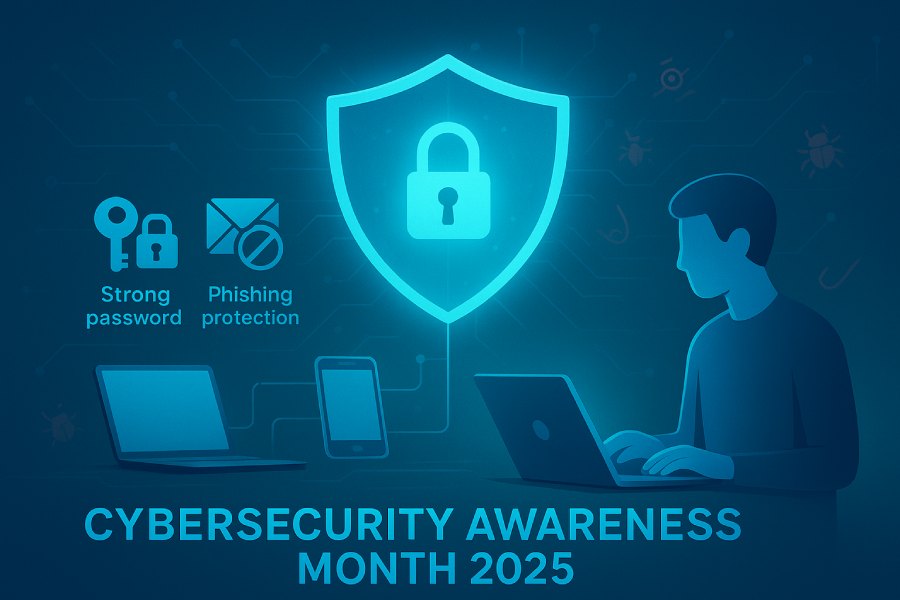
Cybersecurity Awareness Month: How To Stay Safe Online In 2025!
by Phishing Protection
It is finally October, the time when the entire world comes together to discuss a topic that is quietly affecting our everyday lives—Cybersecurity Awareness. CISA (Cybersecurity and Infrastructure Security Agency) and NCSA (National Cyber Security Alliance) launched this initiative together. Cybersecurity awareness month is celebrated in October every year, as it reminds us of the staggering truth that staying safe online starts with us!
Phishing represents one of the most pervasive and damaging cyber attack vectors today, targeting individuals and organizations alike to steal sensitive data, compromise digital identities, and facilitate fraud. These attacks manifest primarily as deceptive emails, fraudulent websites, or even text messages designed to lure victims into divulging credentials, clicking malicious links, or downloading malware. Spear phishing, a highly targeted form of phishing, leverages social engineering defense weaknesses by customizing messages to specific employees or executives, making detection more difficult.
AI-backed voice cloning may lead to vishing attacks!
by Phishing Protection
A group of researchers believes that AI-based voice impersonation can enhance social engineering tactics and make them sound more perfect and convincing. AI voice cloning has the ability to minimize the difference between reality and artificiality. Threat actors can misuse this AI-backed voice cloning technology to target organizations, their employees, and the general public.
Phishing is a sophisticated form of cyberattack where malicious actors attempt to deceive individuals into divulging sensitive information such as login credentials, financial details, or personal data. These attacks commonly employ email as a vector, making phishing detection and email filtering critical components of modern cybersecurity protocols. The impact of phishing extends beyond mere inconvenience; it often results in identity theft, significant financial loss, and compromised network security.
We use cookies on our website to give you the most relevant experience by remembering your preferences and repeat visits. By clicking “Accept”, you consent to the use of ALL the cookies.
This website uses cookies to improve your experience while you navigate through the website. Out of these, the cookies that are categorized as necessary are stored on your browser as they are essential for the working of basic functionalities of the website. We also use third-party cookies that help us analyze and understand how you use this website. These cookies will be stored in your browser only with your consent. You also have the option to opt-out of these cookies. But opting out of some of these cookies may affect your browsing experience.
Necessary cookies are absolutely essential for the website to function properly. These cookies ensure basic functionalities and security features of the website, anonymously.
Cookie
Duration
Description
cookielawinfo-checkbox-analytics
11 months
This cookie is set by GDPR Cookie Consent plugin. The cookie is used to store the user consent for the cookies in the category "Analytics".
cookielawinfo-checkbox-functional
11 months
The cookie is set by GDPR cookie consent to record the user consent for the cookies in the category "Functional".
cookielawinfo-checkbox-necessary
11 months
This cookie is set by GDPR Cookie Consent plugin. The cookies is used to store the user consent for the cookies in the category "Necessary".
cookielawinfo-checkbox-others
11 months
This cookie is set by GDPR Cookie Consent plugin. The cookie is used to store the user consent for the cookies in the category "Other.
cookielawinfo-checkbox-performance
11 months
This cookie is set by GDPR Cookie Consent plugin. The cookie is used to store the user consent for the cookies in the category "Performance".
viewed_cookie_policy
11 months
The cookie is set by the GDPR Cookie Consent plugin and is used to store whether or not user has consented to the use of cookies. It does not store any personal data.
Functional cookies help to perform certain functionalities like sharing the content of the website on social media platforms, collect feedbacks, and other third-party features.
Performance cookies are used to understand and analyze the key performance indexes of the website which helps in delivering a better user experience for the visitors.
Analytical cookies are used to understand how visitors interact with the website. These cookies help provide information on metrics the number of visitors, bounce rate, traffic source, etc.
Advertisement cookies are used to provide visitors with relevant ads and marketing campaigns. These cookies track visitors across websites and collect information to provide customized ads.