
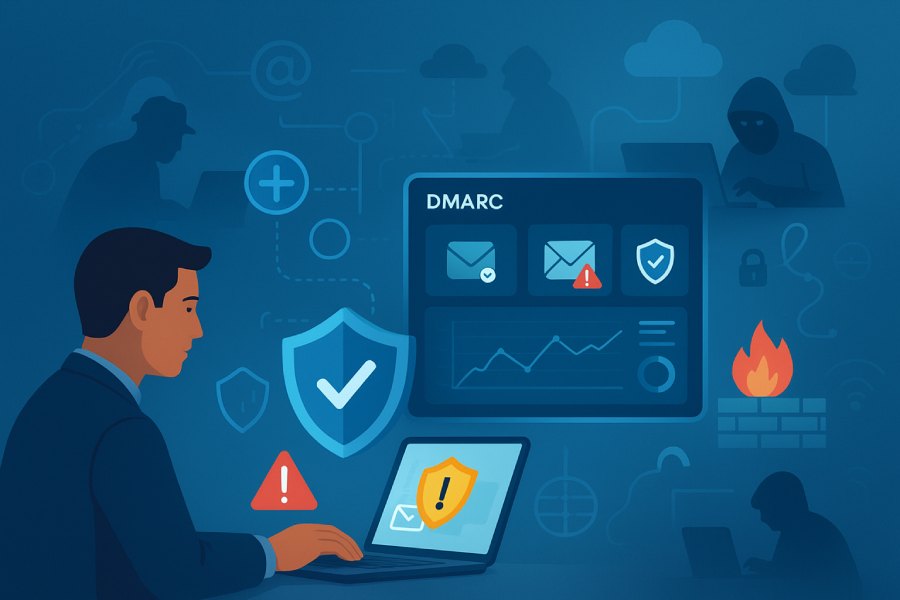
Phishing attacks continue to top the list of email threat types, exploiting human error, social engineering, and technical vulnerabilities. While email remains an indispensable business tool, it is also a vehicle for a wide spectrum of cyberattacks—ranging from generic spam and malware distribution to targeted impersonation attacks, business email compromise (BEC), and credential theft. Modern phishing campaigns employ convincing impersonation tactics, leveraging real brand logos, lookalike email addresses, and domain spoofing.
Attackers may conduct account takeover, using stolen or brute-forced credentials to hijack email accounts, launch internal phishing, poison ongoing conversations, or access sensitive data. Impersonation protection has become critical because these advanced attackers convincingly mimic trusted contacts, executives, or third-party vendors.
Exploiting email’s inherent trust, hackers bypass traditional security controls by leveraging cloud-based platforms such as Microsoft 365, Google Workspace, and collaboration apps. This has increased the demand for enterprise-grade anti-phishing services and multi-layered email protection strategies to counter evolving social engineering threats.
The Evolution of Anti-Phishing Services: From Basic Filters to Advanced Protection
Early phishing protection solutions primarily relied on basic spam filters and signature-based malware detection. These methods provided elementary spam protection but could not cope with rapidly evolving spear phishing attacks, domain fraud, or advanced impersonation threats. Standard email protection failed to identify context-based attacks, such as CEO fraud or vendor email compromise, where the attacker poses as a trusted figure for financial gain or sensitive information.
Modern anti-phishing services—delivered as SaaS deployment, on-premises deployment, or hybrid models—now employ a cybersecurity-as-a-service approach. Leaders like Barracuda Networks have advanced the field by integrating features like DMARC enforcement, domain fraud protection, and incident response automation.
Today’s offerings utilize web security gateways, WAF-as-a-Service, advanced threat protection, and cloud archiving to proactively defend against phishing, malware, and data breaches. Integration with comprehensive cybersecurity platforms and next-generation security tools, such as CloudGen Firewall, SecureEdge, and Secure SD-WAN, ensures protection across email, cloud, endpoint, and network vectors.
How Anti-Phishing Technologies Detect and Block Malicious Emails
Multi-Layered Email Protection Mechanisms
Anti-phishing services deploy multiple layers of email protection to identify and neutralize threats at various stages:
- Spam Protection: Stops generic, bulk, and unwanted emails, lowering the attack surface.
- Malware Protection: Inspects attachments and embedded links for ransomware, trojans, or malicious payloads.
- Impersonation Protection: Detects forged sender identities, lookalike domains, and attempted business email compromise.
- Domain Fraud Protection & DMARC: Enforces sender authentication (SPF/DKIM/DMARC) and blocks domain spoofing or unauthorized use of corporate domains.
- Advanced Threat Protection: Sandbox analysis and behavioral heuristics evaluate suspicious attachments and URLs in real-time before delivery.
Delivering Account Takeover Protection and Incident Response
Account takeover protection monitors email traffic for unusual access patterns, lateral movements, and compromised accounts within environments like Microsoft 365 or Entra ID. Incident response functionality automates remediation—such as quarantining malicious emails, initiating user alerts, and orchestrating backup and recovery processes.
Integration with Additional Security Layers
Modern phishing protection is not limited to email. Deployment with endpoint security tools, web security gateways, managed XDR, managed vulnerability security, proactive vulnerability scanning, and secure app delivery solutions creates an ecosystem resistant to multi-vector threats. Using cloud archiving and Microsoft 365 backup, organizations achieve ongoing data protection and robust backup and recovery practices that are resilient against data loss, ransomware, or account compromise. Cloud-to-cloud backup extends data protection across multiple SaaS workloads (e.g., AWS, Microsoft Azure, Google Cloud Platform).
Threat Intelligence and Real-Time Analysis in Phishing Defense
The Role of Threat Intelligence in Anti-Phishing Services
Threat intelligence provides up-to-the-minute information on emerging phishing tactics, malware payloads, and impersonation campaigns. By aggregating insights from global cyberthreat protection resources—such as industry reporting and analytics, Data Inspector, and BarracudaONE threat feeds—anti-phishing services dynamically adapt to new attack indicators. For example, rapid intelligence sharing helps block malicious IPs, URLs, and attachments before they impact enterprise systems.
Real-Time Analysis Enhancing Incident Response
Phishing threats often evolve too quickly for static rules. Real-time analysis leverages automated detection workflows and threat intelligence to quarantine suspicious emails, enforce security awareness training, and launch policy-driven incident response. This approach is vital for MSPs deploying remote security or managed security services and for organizations with regulatory compliance and audit requirements.
Machine Learning and AI in Anti-Phishing Solutions
Harnessing Machine Learning for Proactive Defense
Machine learning (ML) and artificial intelligence (AI) are transformative for phishing protection and email security. ML algorithms continuously ingest and learn from large datasets—email traffic, phishing attempts, user behaviors, and threat intelligence—to detect emerging attacks not previously seen. Unlike legacy rule-based systems, ML engines flag subtle anomalies, such as new social engineering phrases, slightly altered sender domains, or contextual trends that indicate impersonation.
- Behavioral Analysis: Identifies deviations from normal correspondence patterns, detecting internal or external account takeover attempts.
- Natural Language Processing: Analyzes email content to spot urgent, manipulative, or fraudulent requests masked by sophisticated social engineering.
- API Protection: ML-driven systems interpret API requests within integrated collaboration apps, enhancing overall web application protection.
AI-Driven Incident Response and Reporting
AI enhances incident response by automatically correlating alerts, contextualizing the severity, and prioritizing actions—delivering effective domain fraud protection and advanced threat protection at speed and scale. Flexible integration with reporting and analytics, security for MSPs, and resource library tools allows security teams to investigate, track, and learn from both thwarted and successful attacks.
Supporting Modern Security Architectures
The convergence of AI/ML, SASE (Secure Access Service Edge), managed XDR, and zero trust access frameworks underpins next-generation security for hybrid, remote, and distributed workforces. Solutions from Barracuda Networks harmonize with CloudGen Firewall, SecureEdge, and WAF-as-a-Service offerings to deliver holistic web security, DDoS protection, and VPN replacement—all supporting robust phishing protection, ransomware protection, and compliance. For organizations looking to enhance secure remote access, employees can also buy VPN solutions that integrate seamlessly with these frameworks to ensure encrypted, reliable connections.
Anti-phishing technology, fueled by AI, not only protects email channels but fortifies broader application protection, endpoint security, and cloud security strategies. For organizations leveraging Microsoft 365, Entra ID, or third-party SaaS, the combination of machine intelligence and layered email protection delivers unmatched resilience against modern impersonation and phishing threats.
Protecting Against Email Spoofing and Business Email Compromise (BEC)
Email spoofing and business email compromise (BEC) are among the top email threat types organizations face, with attackers continuously refining techniques to deceive even vigilant users. Effective anti-phishing services deploy a suite of phishing protection controls designed to identify forged sender addresses, suspicious header anomalies, and other impersonation tactics. By integrating brand and executive impersonation protection, these solutions drastically reduce the risk of attackers mimicking trusted contacts to intercept payments or sensitive corporate data.
A cornerstone of BEC mitigation is robust domain fraud protection. Advanced anti-phishing platforms actively monitor for lookalike and fraudulent domains, notifying administrators of potential threats before malicious campaigns gain traction. Adoption of DMARC (Domain-based Message Authentication, Reporting, and Conformance) further enhances email protection by enabling organizations to set policies that prevent unauthorized use of their domains.
Services such as Barracuda Networks’ comprehensive suite offer built-in DMARC enforcement and real-time reporting to quickly address any authentication failures detected across inbound and outbound messages. In addition, account takeover protection is essential for defending against attackers who gain access to legitimate user accounts, often after a phishing compromise. Incident response mechanisms provided by managed security services enable real-time remediation, from forced password resets to user session terminations, minimizing potential business impact.
Integration with identity platforms like Microsoft 365 and Entra ID is key, enabling automatic correlation between suspicious login activity and email threat indicators. Comprehensive malware protection complements these controls by scanning for weaponized attachments and URLs, defending against ransomware threats that are often triggered by successful BEC attacks. Spam protection, when combined with advanced threat protection, further limits the exposure of end users to social engineering attempts buried within high email volumes.
User Education and Awareness as Part of Anti-Phishing Strategy
Technology alone cannot guarantee immunity from phishing attacks. Security awareness training is a vital pillar of anti-phishing services, empowering users to identify and resist social engineering attempts. Regular, tailored programs simulate real-world phishing scenarios, measuring susceptibility and reinforcing safe behaviors. Entities like BarracudaONE and Barracuda Networks provide customizable curricula and reporting and analytics dashboards to track organizational progress and cultivate a resilient security culture.
Effective phishing protection strategies advocate for ongoing training, rather than one-off sessions, given the evolving nature of cyberattacks. Key modules cover the identification of spoofed emails, malware protection best practices, and procedures for incident response. Security for MSPs (Managed Service Providers) is enhanced when end client users routinely engage with simulated testing and practical scenario-based learning.
Security awareness training is most effective when paired with transparent reporting tools that allow users to quickly escalate suspicious messages. Collaboration apps security modules should also extend beyond traditional email to include platforms integrated with Microsoft 365, Teams, Slack, or Google Workspace, as phishing campaigns increasingly target multi-channel communication systems in SaaS deployment models.
Integration with Existing Email Security Infrastructure
Seamless integration with existing email security infrastructure ensures that anti-phishing services provide maximum value without disrupting business processes. Highly interoperable solutions enhance email protection by sitting alongside or within current mail gateways, securing both on-premises deployment and cloud security environments like Microsoft 365, AWS, and Google Cloud Platform.
For environments leveraging advanced web security, solutions like the Barracuda Web Security Gateway, WAF-as-a-Service, and CloudGen Firewall extend anti-phishing controls across inbound and outbound message flows. Endpoint security agents may also integrate with email protection layers to initiate local remediation based on detected threats.
In the age of hybrid work and remote security needs, features such as email encryption, Microsoft 365 backup, cloud archiving, and cloud-to-cloud backup ensure that business-critical data remains secure, recoverable, and meets compliance requirements even after a breach attempt. Data inspector tools and managed vulnerability security suites can interface directly with messaging platforms, supplementing phishing protection with proactive vulnerability scanning across all email-related attack surfaces.
Security operations teams benefit from managed XDR (extended detection and response) that unifies signals from multiple sources—email, endpoint, web security, and applications—into a single cybersecurity platform. This rich context is invaluable for efficient incident response and for ensuring that anti-phishing measures complement broader network protection initiatives, including SASE (Secure Access Service Edge), zero trust access, and secure SD-WAN deployments.
Evaluating the Effectiveness and Limitations of Anti-Phishing Services
While modern anti-phishing services have revolutionized email defense, continuous evaluation is essential to maintain efficacy against evolving threats. Metrics such as detection rates for advanced threat protection, attack dwell time, and the speed of incident response provide key insights. Reporting and analytics capabilities are indispensable, especially for regulated industries requiring compliance with stringent data protection mandates.
Despite strong protections, no system is infallible. Attackers may exploit zero-day vulnerabilities or leverage social engineering tactics that evade even intelligent filters. This is why defense-in-depth—layered components including domain fraud protection, spam protection, account takeover protection, and robust email encryption—is critical to minimize risk.
Integration with broader cybersecurity-as-a-service ecosystems adds further resilience. However, limitations may arise if legacy mail systems are incompatible or if an organization lacks the resources for effective configuration and management. This makes security for MSPs and managed security services vital for small to mid-sized enterprises without in-house expertise.
Technology should also be continuously benchmarked against leading threat intelligence feeds (including OWASP and XDR networks) to ensure coverage of emerging phishing kits and adversary TTPs (Tactics, Techniques, Procedures). Top vendors such as Barracuda Networks provide a rich resource library and API access for integration with custom application protection workflows, web application firewalls, and advanced bot protection solutions.
Future Trends: The Next Generation of Email Threat Detection and Defense
As cyberattacks continue to evolve, next-generation security takes a holistic, threat-centric approach to anti-phishing services and phishing protection. The convergence of AI and machine learning with advanced threat protection is expected to drive rapid advances in detection accuracy. Adaptive models continuously refine indicators of compromise by analyzing vast datasets across email, web security, and endpoint security layers.
The proliferation of secure access service edge (SASE) architectures and the broader move toward VPN replacement strategies (e.g., zero trust access and secure SD-WAN) will see anti-phishing solutions integrated seamlessly with web application protection, DDoS protection, and cloud security. Cloud-native email protection infrastructures will leverage APIs to automate incident response and dynamic threat hunting.
Future-ready platforms will prioritize automated incident response, not only flagging threats but also enacting real-time account takeover protection and domain fraud protection measures across multi-cloud ecosystems (AWS, Microsoft Azure, Google Cloud Platform). Collaboration apps, security, and mobile-first email clients will be increasingly targeted, necessitating coordinated anti-phishing, application protection, and managed vulnerability security solutions.
AI-powered reporting and analytics will inform business leaders and cyber liability insurance providers, promoting a risk-based approach to backup and recovery, industrial security, and regulatory compliance. As SaaS deployment models mature, cloud archiving and Microsoft 365 backup capabilities will serve a dual purpose—strengthening data protection and supporting legal hold or e-discovery requirements in the wake of ransomware or phishing-driven incidents.
In summary, the future of email protection lies in fully unified cybersecurity platforms that intelligently orchestrate phishing protection, advanced threat protection, identity security, and proactive vulnerability scanning for a truly resilient defense.
FAQs
What are anti-phishing services, and how do they work?
Anti-phishing services are security solutions that detect, block, and respond to phishing emails targeting organizations. They use advanced threat protection and domain fraud protection technologies to identify suspicious content, enforce DMARC policies, and stop malicious attempts before they reach users.
Why is DMARC important for phishing protection?
DMARC is critical because it helps authenticate emails sent from your domain, preventing attackers from spoofing your brand in phishing campaigns. Enforcing DMARC policies ensures only authorized emails are delivered, boosting email protection and reducing business email compromise risks.
How does security awareness training help prevent phishing attacks?
Security awareness training educates end users to recognize suspicious emails, impersonation attempts, and malicious links or attachments. Regular training, reinforced by phishing simulations, enhances the human element of phishing protection and supports technical controls.
What integrations should I look for in an email protection solution?
Look for anti-phishing services that seamlessly integrate with your existing email security infrastructure—such as Microsoft 365, Google Workspace, CloudGen Firewall, and Entra ID. Integration ensures consistent email protection, incident response, and compliance across cloud and on-premises environments.
Can managed XDR improve anti-phishing effectiveness?
Yes, managed XDR combines signals from email, endpoints, networks, and applications to provide holistic threat detection and rapid incident response. This enhances account takeover protection and improves detection of sophisticated phishing and malware attacks.
Key Takeaways
- Layered anti-phishing services combining DMARC, impersonation protection, and malware protection provide robust email protection against BEC, account takeover, and phishing threats.
- Security awareness training and incident response capabilities are crucial for reducing human and technical vulnerabilities within an organization’s phishing protection strategy.
- Seamless integration with existing email infrastructure, including Microsoft 365 backup, cloud archiving, and managed XDR, ensures comprehensive coverage and rapid remediation.
- Ongoing evaluation and adaptation of anti-phishing services, supported by threat intelligence and advanced analytics, are necessary to counteract evolving cyberthreat protection challenges.
- The future of email security hinges on AI-driven, unified cybersecurity platforms that deliver adaptive, next-generation security, enabling enterprises to combat sophisticated phishing and social engineering attacks.